
How to Create Mockups That Impress Your Clients
Learn how to create mockups that win projects. This guide covers planning, tool selection, and presentation tips for designers.
November 2, 2025•13 min read
What is omnichannel marketing? Learn how to build a seamless customer experience that drives loyalty and growth for your UK business with this practical guide.
Instastock Team
November 1, 2025 • 13 min read
Ever added something to your online shopping basket on your phone during the morning commute, only to finish the purchase on your laptop later that evening without missing a beat? That slick, unbroken journey is the very essence of omnichannel marketing.
It’s all about treating every single customer interaction—no matter where it happens—as part of one long, continuous conversation.
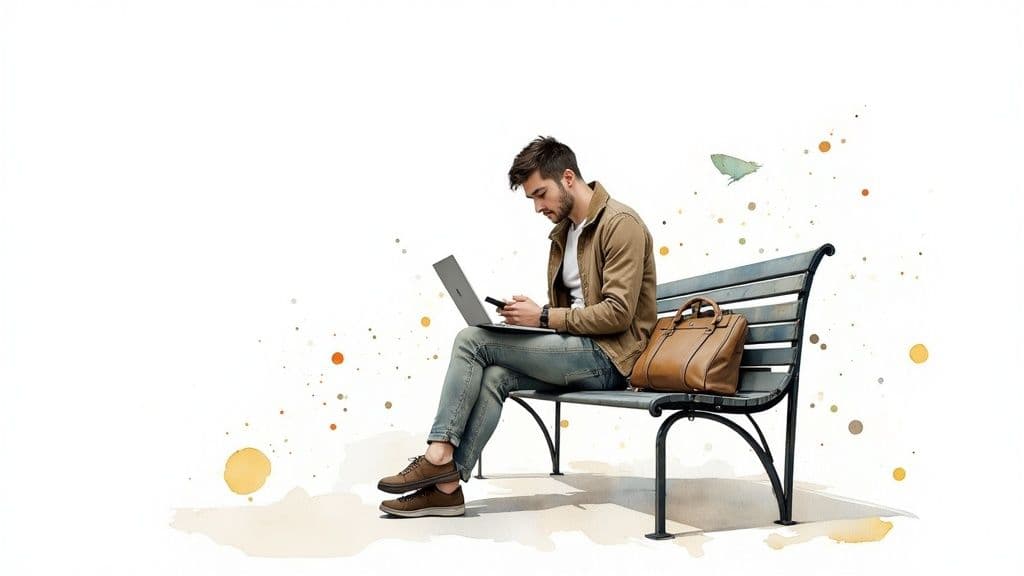
At its heart, omnichannel is a strategy that puts the customer right in the centre of everything. It means all your channels—your website, mobile app, physical shop, social media, and emails—stop acting like separate entities and start working together as one cohesive team. They share data and context to create a completely unified experience for the customer.
Think of it like picking up a conversation with a friend. You can pause it on a phone call and seamlessly resume it later via text, without ever having to repeat yourselves. The context is always there, and the conversation just flows.
That’s what this feels like for your customers. They could be scrolling through your products on Instagram, get a personalised email about those very items a day later, and then pop into your shop where a sales assistant can already pull up their wish list. It’s all connected.
To break it down even further, here's a quick look at the core ideas.
| Core Principle | Description |
|---|---|
| Customer-Centric | The entire strategy revolves around the customer's journey, not the brand's channels. |
| Seamless Integration | All channels (online and offline) are connected and share data in real-time. |
| Consistent Experience | The brand's voice, messaging, and service feel the same everywhere. |
| Personalisation | Uses customer data to tailor interactions and offers at every touchpoint. |
Ultimately, it’s about making things easy and intuitive for the person on the other end.
The real magic of omnichannel lies in that seamless integration. This isn’t just about having a presence on lots of different platforms; it’s about making those platforms talk to one another. You’re building a single, complete view of each customer, which allows you to deliver an experience that’s always consistent, personal, and relevant, no matter how they choose to interact with you.
The goal of an omnichannel strategy is to create a seamless customer experience that is personalised, simple, and relevant across all channels to help drive traffic and build loyalty.
This kind of cohesive approach meets modern customers exactly where they are. It acknowledges their history with your brand and helps you anticipate what they might need next. You’re not just processing transactions; you’re building a relationship that feels intelligent and continuous.
Let's be honest, the UK market is incredibly competitive, and customer expectations have never been higher. A genuinely joined-up experience isn't just a "nice-to-have" anymore; it's a powerful way to stand out from the crowd.
Getting it right can bring some serious benefits:
If you’re looking to dig even deeper into this topic, you might find a comprehensive guide to omnichannel marketing a really helpful read.
It’s easy to get these two mixed up. In fact, many people use them interchangeably, but the difference between omnichannel and multichannel marketing is massive. It’s not just semantics; it’s a whole different way of thinking about your customers. Most businesses today are multichannel. Far fewer have managed to become truly omnichannel.
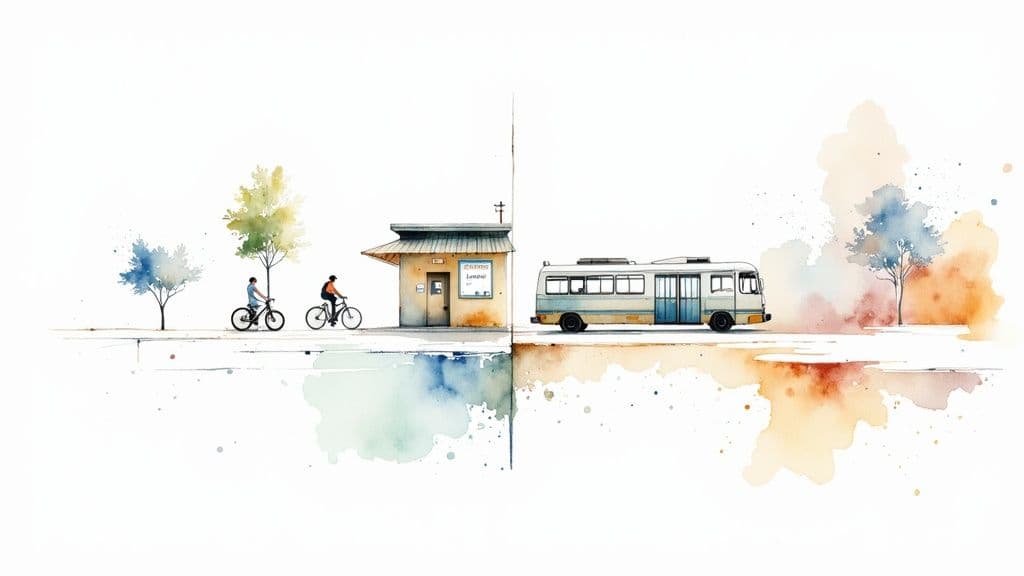
Think of multichannel marketing like a wheel with spokes. The brand is at the hub, and each channel—your website, your physical shop, your social media—is a separate spoke reaching out to the customer. They all lead back to the brand, but they don't connect with each other. A customer’s journey down one spoke is a completely separate trip from their journey down another.
The focus here is simply on being available in many places. It's about giving customers options, which is a great start, but the experience can feel disjointed because the channels don't talk to each other.
Omnichannel flips this on its head. Instead of a wheel with spokes, imagine a web where every point is connected. The customer is at the centre, not the brand.
This approach weaves all your channels together into a single, cohesive tapestry. A customer might start browsing on their phone during their morning commute, add an item to their basket on their laptop at lunchtime, and then pop into the physical store on the way home to buy it. In an omnichannel world, every part of that journey is smooth and connected.
Omnichannel doesn’t just mean you have multiple channels; it means those channels are integrated to create one fluid, continuous customer experience.
The magic happens behind the scenes. Data flows freely between all your touchpoints, so each channel knows what happened on the others. This creates a consistent and deeply personal conversation with the customer, no matter how or where they choose to interact with you. It’s this deep integration that turns a good customer experience into an exceptional one.
To make this crystal clear, let's break down the key differences side-by-side.
| Feature | Multichannel Marketing | Omnichannel Marketing |
|---|---|---|
| Primary Focus | The Brand and its Products | The Customer and their Journey |
| Channel Strategy | Channels work in isolation, often competing for attention. | All channels work together in a unified system. |
| Customer Experience | Inconsistent; feels different on each channel. | Consistent and seamless across all touchpoints. |
| Data Usage | Data is siloed within each individual channel. | Data is shared and integrated across all channels. |
As you can see, the core difference is about perspective. Multichannel is a brand-out approach, while omnichannel is a customer-in approach. This fundamental shift is what unlocks a truly modern and effective marketing strategy.
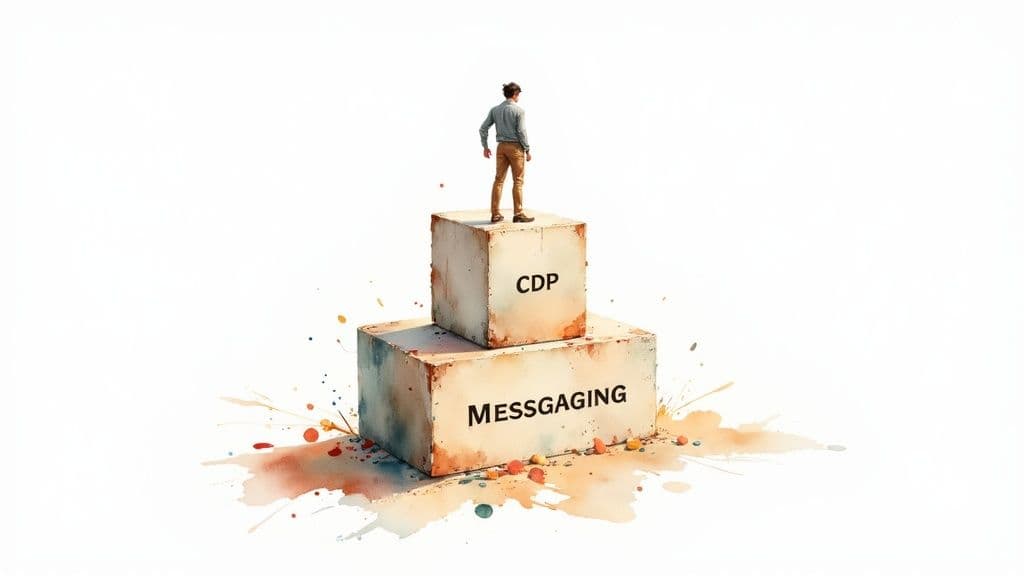
Pulling off a genuinely seamless omnichannel experience doesn't just happen. It's carefully built on a foundation of key components, all working together in harmony. Think of it like building a house – you need a solid blueprint, the right materials, and a skilled crew to bring the vision to life.
The absolute bedrock of it all is a unified customer view. This means knocking down the walls between your marketing, sales, and service teams to get rid of those frustrating data silos. The goal is simple: create one comprehensive profile for every customer that tracks every single interaction, no matter where it happens.
Having this single source of truth allows you to see the entire customer journey, not just tiny, disconnected snapshots. It’s the difference between knowing a customer visited your website versus knowing they visited your website, bought something in-store last week, and then called your support team yesterday.
So, how do you get this unified view? Many businesses turn to a Customer Data Platform (CDP). A CDP is like the central nervous system of your omnichannel strategy. It pulls in data from all your touchpoints—your website, app, physical stores, social media channels—and neatly organises it into individual customer profiles.
This isn't about hoarding data, though. It's about putting it to work. With a complete picture of each customer, you can deliver the kind of personalised experiences that people actually appreciate. For instance, if you know someone was just browsing a specific product category online, you can ping them a relevant offer via email.
The real power of omnichannel is using integrated data to make every customer interaction feel personal and relevant. You stop broadcasting generic messages and start having meaningful conversations.
Once your data is in order, the next building block is consistency. Your brand's voice, look, and feel must be the same everywhere. A customer should get the same great experience whether they're scrolling through your TikTok, opening a marketing email, or chatting with a staff member in one of your shops.
This consistency builds a huge amount of trust and makes your brand feel dependable. In the UK, marketers are juggling this across multiple platforms. A recent report found that UK B2C marketers use an average of five different channels in their campaigns, with email (82%) and social media (67%) leading the pack. Keeping your brand story straight across all of them is crucial. For more stats, you can find great insights on omnichannel engagement on moengage.com.
Finally, you need the right tech to bring your strategy to life. This isn't one single tool, but a stack that works together.
These tools are what make it possible to deliver personalised experiences at scale. By combining data, consistent messaging, and the right technology, you create a powerful system that helps you understand how to improve conversion rates in a way that truly connects with modern customers.
Let's be honest, setting up a true omnichannel strategy can feel like a big undertaking. But the results? They’re more than worth the effort. This isn't just about showing up on a bunch of different platforms; it’s about weaving them all together into one seamless, positive experience for your customer.
Think of it as shifting from a series of separate, disjointed chats to one continuous, evolving conversation. That’s the magic that turns a one-time buyer into a lifelong fan. When a customer can hop from your app to your website, and then walk into your shop without hitting a single snag, you build a deep sense of trust. That effortless flow is what modern customer loyalty is built on.
The numbers really do tell the story here. In the UK, where shoppers have seriously high expectations, a slick omnichannel strategy is no longer a "nice-to-have"—it's a must. Companies that get it right hold onto an incredible 89% of their customers. Compare that to the tiny 33% retention rate for businesses stuck in a single-channel mindset, and the difference is staggering.
It's not just about keeping them, either. Omnichannel shoppers tend to spend more over their lifetime, showing a 30% higher lifetime value than those who only shop through one channel. You can dig into more of these omnichannel shopping statistics on uniformmarket.com.
This kind of impact happens because every interaction feels personal and connected. You stop treating a purchase as a one-off transaction and start seeing it as another chapter in a long-term relationship.
By unifying the customer journey, you’re not just improving the shopping experience—you're fundamentally strengthening the customer’s relationship with your brand, making them feel seen and appreciated at every step.
This connection is what fuels repeat business and turns happy customers into your best advocates. It’s a core part of a wider strategy, and you can explore more about the general benefits of digital marketing in our guide.
Beyond happier customers and healthier sales, omnichannel marketing gives you something incredibly valuable: a complete, unified view of your data. When every tweet, click, call, and store visit feeds into a single customer profile, you suddenly get a crystal-clear picture of who they are and what they want.
This integrated data lets you connect the dots. You can finally get answers to those big questions:
Armed with this kind of insight, you can stop guessing and start making sharp, data-driven decisions that lead to real growth. You can fine-tune your marketing budget, perfect your product line-up, and design services that truly meet your customers' needs. It creates a powerful cycle where every interaction doesn't just delight the customer, but also makes your entire business smarter.
Making the leap to an omnichannel approach can feel like a massive undertaking, but it doesn't have to happen all at once. The secret is to see it as a series of steady improvements, not a frantic, overnight overhaul. If you break it down into manageable steps, you can build a more connected and customer-focused experience that actually moves the needle.
Remember, the goal here is progress, not perfection. Start small, learn as you go, and don't forget to celebrate the wins along the way.
Before you can build a seamless journey, you first have to understand the one your customers are already taking. It's time to put yourself in their shoes and map out every single touchpoint they have with your brand. Think about everything from the moment they first hear about you to long after they’ve made a purchase.
This isn't just about listing channels; it's about getting inside the customer's head.
Creating this map will shine a light on the gaps and inconsistencies in your current setup, showing you exactly where to focus your energy.
One of the biggest roadblocks to a true omnichannel experience is internal silos. Your marketing, sales, and customer service teams can't operate as separate islands anymore—they need to start sharing information freely. This is where a unified data platform, like a Customer Data Platform (CDP), becomes absolutely crucial.
Think of a CDP as a central nervous system for your customer data. It pulls information from all your different channels to create a single, comprehensive profile for each person. This unified view is the engine that drives genuine personalisation.
An omnichannel strategy is only as strong as the data that supports it. When your teams and technology are aligned, you can finally deliver the consistent, contextual experiences customers have come to expect.
Please, don't try to transform everything at once. Pick one specific part of the customer journey you identified back in step one—something like the abandoned cart process—and run a small pilot programme to make it omnichannel. This lets you test, learn, and prove the value of the approach without a huge upfront investment.
For instance, you could connect your e-commerce platform with your email and SMS marketing tools to create a really cohesive follow-up sequence. The insights you'll get from a small-scale test like this are invaluable as you start to roll the strategy out more widely. Staying organised is key here, and using a good social media content calendar template can help you align all your messaging for these tests.
This kind of investment is clearly paying off for UK businesses, with a reported 287% increase in omnichannel marketing sales in just one year. This growth points to a major shift in customer behaviour, especially when you consider that around 54% of consumers now prefer using messaging apps for quick brand responses. You can find out more about these top digital marketing trends on wpsupportspecialists.com. All this data suggests that building real-time communication into your pilot is a very smart move.
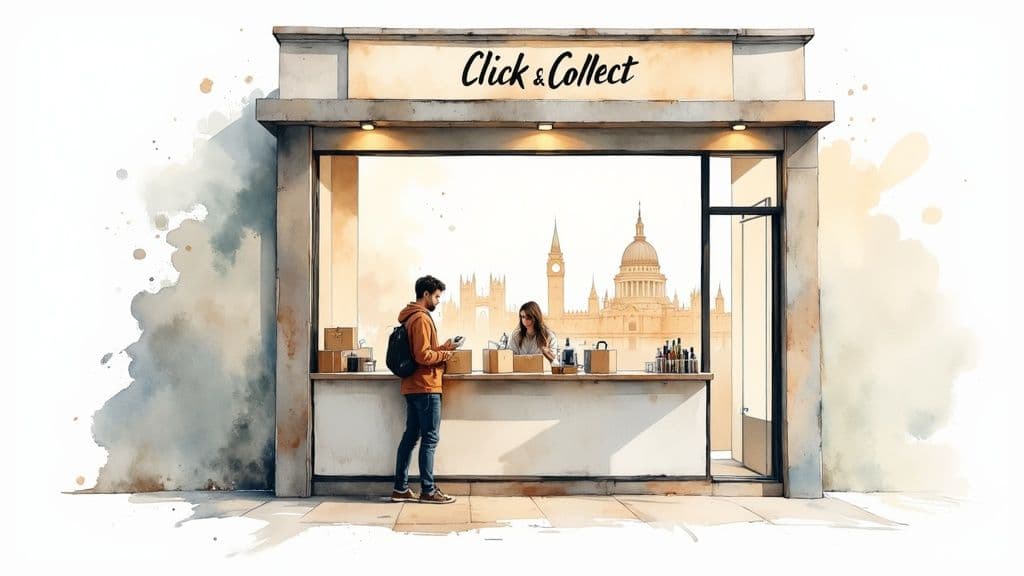
It’s one thing to talk about the theory, but seeing how omnichannel marketing works in the wild is where things get really interesting. Some of the UK’s biggest brands are absolutely nailing it, showing everyone how a joined-up customer journey builds real loyalty and drives sales. They’re a brilliant source of inspiration.
Take John Lewis & Partners, for example. Their "click and collect" service is a masterclass in weaving together the digital and physical worlds of retail. You can be browsing on your phone on the bus home, tap to buy something, and then swing by a local Waitrose to pick it up on your way. It's just that simple.
But it’s more than just a clever delivery option. It’s about making life genuinely easier for the customer by making different parts of the business work as one. Their app even enhances the in-store experience, letting you check stock levels or scan a product to read reviews while you're standing right there in the aisle.
John Lewis is far from the only one getting it right. Plenty of other UK retailers are cleverly using tech to close the gap between their website and their high-street shops.
Smart In-Store App Use: Many brands now use their mobile app as a shopping companion. You might get a personalised offer pinged to your phone as you walk through the door, or you could use the app to scan a barcode and get all the product details you need.
A Single View of You: The secret sauce behind all this is a unified customer profile. Every purchase you've made, every item on your wish list, and every support chat you’ve had is all stored in one place. This lets them make every interaction feel much more personal and genuinely helpful.
The best omnichannel strategies don’t just give you lots of channels to choose from. They make moving between them feel so effortless that you don’t even notice it’s happening.
By looking at how these big names pull it off, you can get some fantastic, practical ideas for your own business. It all comes back to a simple idea: meet your customers where they are and make every touchpoint part of a single, continuous conversation.
As you start to explore omnichannel marketing and what it could mean for your business, a few common questions always seem to come up. Let's tackle some of the most frequent ones to clear up any confusion.
Absolutely not. While you often see the big high-street names held up as shining examples, the core ideas of omnichannel marketing work for any size of business.
A small online shop can create a brilliant, connected experience between its website, Instagram DMs, and email newsletters. The secret isn't a massive budget; it's a laser focus on consistency and seeing the customer as one person, no matter where they interact with you.
This is a great question. Measuring the success of an omnichannel strategy means shifting your thinking away from siloed metrics. Instead of obsessing over just email open rates or social media likes, you need to look at bigger, customer-focused goals.
The real return on your investment isn't just about a quick sale. It's about building genuine, long-term loyalty by understanding the entire customer journey—from that very first click to the final purchase and everything that comes after.
The honest answer? It varies wildly. Your costs really depend on where you're starting from and how ambitious your plans are.
You don't need to go all-in on a giant, enterprise-level tech suite from day one. You can start small by simply making your existing tools talk to each other. For example, connecting your e-commerce platform with your email marketing service to keep customer data in sync is a fantastic first step.
Often, the biggest initial investment isn't money, but time and brainpower—taking the time to properly map out your customer journey and get all your teams on the same page.
Ready to create stunning visuals for every channel in your omnichannel strategy? With Instastock, you can generate unique, high-quality images in seconds that you fully own. Get your unique images with Instastock
Learn how to create mockups that win projects. This guide covers planning, tool selection, and presentation tips for designers.
Your complete guide to social media image dimensions. Get the latest sizes and best practices for Instagram, Facebook, X, and LinkedIn to optimize your content.

Stuck for inspiration? Discover 12 fresh social media content ideas to boost engagement and grow your audience, with tips for creating stunning visuals.